

Oak Hill Center for Rehabilitation and Nursing Is Dispelling 4 Work-From-Home Myths
The COVID-19 pandemic has turned millions of people from office workers to work-from-homers. And things went so well, some companies have announced that they will allow parts of their workforce to remain remote workers permanently.
Despite the benefits, there is still plenty of stigmas connected to working from home. Oak Hill Center for Rehabilitation and Nursing is dispelling four work-from-home myths in case you’re trying to convince your boss to let you do some more work from your dining room table.
Productivity Suffers
It’s natural to think that people working from home – with potential distractions like television, going outside, taking care of pets, etc. – would cause productivity to suffer. But a study conducted by Stanford University found that productivity went up 13% and companies earned around $2,000 more profit per remote employee.
Remote Work is Solitary
Sure, you can be solitary if you want to, but there are plenty of ways for extroverts to enjoy office camaraderie. Thanks to meeting apps like Zoom and Microsoft Teams, communicating with those in the office is as easy (or sometimes even easier) than being there in person.
You Need to Have a Home Office
The only thing you really need is a comfortable place to work where you will be productive. Experts recommend that you set up shop in an area of the house that you don’t associate with leisure (like the family room or bedroom), but if your space is limited, you can make any location work. Even switch things up every now and then!
People Working From Home May Not Be Working 9-5
Bosses may be skeptical that people working from home are actually putting in the time, but studies show that 28% of workers started working before 8:30 a.m., 40% use their computers after 10 p.m., and 26% of work happens outside of normal working hours. So the research shows that working from home means people will be more likely to check in after-hours, when that usually would not be the case during the commuting-to-the-office lifestyle.
To learn more about Oak Hill Center for Rehabilitation and Nursing and all of the services they offer, visit https://oak-hill-center.facilities.centershealthcare.org/.
Extraordinary Individuals: #CentersHeroes
A message from CEO, Kenny Rozenberg, to #CentersHeroes:
Our thanks—and our hearts—go out to you.
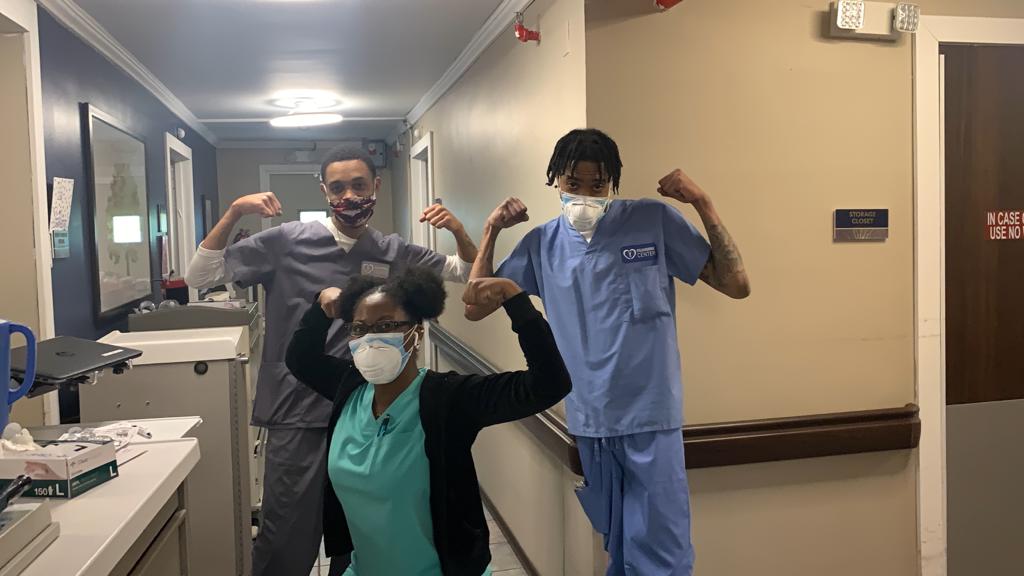
I’ve never been more proud of—or awed by—the Centers Health Care teams across our network and throughout our facilities. At this critical time, in the face of the COVID-19 pandemic, all of you—administrators, therapists, nurses and nurses aides, social workers, hospital liaisons, receptionists, recreational, food and cleaning staffs—have stood up and met the challenge head on. You are the best. You are the bravest. You are Centers Heroes!
Watch our #CentersHeroes in action.

Every day, without fail, you demonstrate the courage to step up—and the commitment to safeguard the health and wellbeing of our patients, residents and your co-workers. The world is changing. You are not…because I’ve seen it with my own eyes: you have always been steadfast in your dedication and courage.
I want to highlight a #CentersHero, Shellan Robinson, LPN at Ellicott Center. “I love what I do. I can’t think of anything more rewarding than being a nurse: taking care of people in need, easing their pain, comforting and engaging them. In the last several months, with the arrival of COVID-19, we have experienced dramatic new challenges in our work. But one thing remains the same: I still love what I do.” Click here to read more
Shellan’s story is just one of many—stories of the unsung heroes throughout Centers Health Care. We honor you. We salute you. We thank you from the bottom of our hearts. You are our heroes.
Our partners at the Buffalo Sabres also recognize and salute our #CentersHeroes. Goaltender Carter Hutton, sends a shoutout to you all:
“On behalf of the Sabres, I want to say thank you to our friends at Centers Health Care. You show up every single day to help prevent Covid-19. Your support is great for the community. Thanks for keeping us safe.”
Watch the full video of Carter here
I know this is not easy—for you or your families. The pandemic may in fact be the greatest challenge you ever face. But you have proven by your every day actions—by your commitment and your compassion—that you are up to the challenge.
I want to join the Sabres in thanking every #CentersHero…as well as all healthcare workers and first responders on the frontline of the COVID-19 pandemic.
Special Perks for Special Healthcare Workers—Like You.
Take advantage of these special FREE resources now available to healthcare workers and first responders.
Companies across New York and across the country are stepping up to support health care workers who are on the frontlines of the fight against COVID-19. Please explore these resources. Thanks for your hard work. You deserve all the help you get!
Allbirds
Allbirds is donating shoes to the medical community. They’ve already given out $500,000 worth.
Email together@allbirds.com for your free pair of wool runners.
Krispy Kreme
Krispy Kreme is offering anyone in the medical community a dozen doughnuts, free of charge. Valid every Monday through May 11.
“Just go to a Krispy Kreme drive-thru and show us your employer badge. That’s it,” the company said. “Pick up some free dozens on the way to work for you and your colleagues, or maybe a free dozen on your way home to family after a long shift.”
Sweetgreen
Sweetgreen is delivering free salads and bowls to hospital workers.
Hertz Car Rentals
Hertz is offering NYC healthcare workers a free rental car, up to 1 month!
Starbucks Coffee
A free tall hot or iced brewed coffee to anyone that identifies themselves as a COVID-19 front line responder through May 3rd.
Uber Eats
Uber Eats has pledged to give 300,000 free meals to first responders and health care workers.
Four Seasons Hotel
The Four Seasons Hotel on 57th Street will provide FREE lodging to doctors, nurses & medical personnel currently working to respond to the pandemic.
The hotel, like many, is closed due to COVID-19 until 4/15. But healthcare workers can call the hotel at 212-758-5700 to book a free room.
Crocs Shoes
Get a free pair of crocs to help you, while you help us alot.
AirBnb
Providing health care professionals, relief workers and first responders free or subsidized housing.
Childcare
Westchester Childcare
All school districts in Westchester County are now providing childcare for children ages 5 to 12 for healthcare workers and first responders with no other childcare options.
New York City Childcare
Regional Enrichment Centers—places where the children of front-line workers can be safely cared for while their parents continue to serve the city in this time of need.
Long Island Childcare
Emergency childcare is available for residents of Nassau and Suffolk County.
For more special perks and discounts, click here.
How to use Facetime to talk to friends and loves ones
How to use Facetime to talk to friends and loves ones
Available to iPhone and iPad users
- In the Facetime app, tap the plus button and type the person’s phone number or email address.
- Tap the number or address, then tap Audio or Video.
- If you have the person’s phone number or email address saved in your contacts, you can start typing their name and tap the name when it appears.
Once you have made the call, the next time you open the app, their name will appear when you open the app. Simply tap on their name.
How to use WhatsApp to talk to your loved ones
How to use Whatsapp to talk to your loved ones
Simple:
- Install Whatsapp on your phone.
- Tap on Whatsapp.
- Tap on the contact you want to call.
- Tap on the movie camera icon.
- You’re on!
How to use Skype to talk to friends and loved ones
How to use Skype to talk to friends and loved ones.
- Check for a webcam.Be sure your computer has a webcam. On most laptops, the webcam will look like a small hole in the top border of the screen.
- Install Skype.Depending on whether or not you have a Mac or a PC, the download link is different.
- For Windows users:Go to this link: http://www.skype.com/en/download-skype/skype-for-computer/. Click on the green button that says, “Get Skype for Windows Desktop.”
- For Mac users:Go to this link: http://www.skype.com/en/download-skype/skype-for-mac/. Click on the green button that says, “Get Skype for Mac.”
- Follow installer instructions.The Skype download should start automatically and the installer will guide you through how to install the program.
- Open Skype.After the program is finished installing, open up Skype. If you have trouble finding the program, follow these instructions for Mac or PC.
- For Windows users:Press your Windows key (left of Alt key), type “Skype” and press ↵ Enter.
- For Mac users:Open up Finder, search for “Skype,” then click on the program
- Click on a contact.In the left side of your screen, you will see a list of contacts if you have added any. Click on the name to open up a conversation with that person.
- If you haven’t added any contacts, you will first have to add at least one. Ask for a friend’s Skype ID, click Contacts in the upper left of the window, click Add Contact in the dropdown menu, then type your friend’s Skype ID.
- Start a video call.To start a video call, you must first be in a conversation with a contact. The instructions are slightly different for Mac and PC users.
- For Windows users:Click on the icon in the upper right corner of the window that looks like a video camera. It should be a blue circle with a white video camera inside.
- For Mac users:Click on the icon in the upper right corner of the window that looks like a video camera. It should be a green circle with a white video camera inside. Depending on your version of Skype, the icon may instead simply say, “Video Call.”
- You may be asked for permission for Skype to use your video camera, click “Allow” if you are comfortable with Skype having access to your camera.
- End the call when done.End the call by pressing the red button on the bottom of the video call window. The icon looks like a red circle with a white phone inside of the circle.
- You may need to move your cursor around the inside of the video call window to reveal the hang-up button.
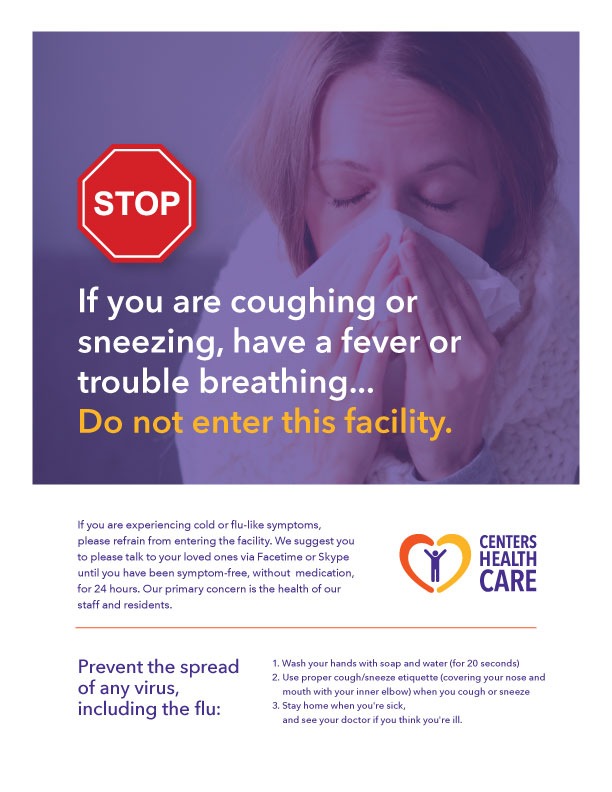
Coronavirus Notice:
Oak Hill Center for Rehabilitation and Nursing Shares Ways to Help Unpaid Caregivers
Unpaid caregivers are the unsung heroes who are there for the elderly members of the family and when someone is stricken with a major illness.
Many people choose to age in place, which sometimes places a lot of stress on the caregiver. While we would encourage people in this situation to check out a senior living community like Oak Hill Center for Rehabilitation and Nursing, we understand that everyone has their reasons for each particular living situation.
Caregiver support groups are gaining popularity as the number of caregivers in the country grow, but there are also other resources available for those who might either be juggling a job with their caregiving duties. The AARP is joining up with ReACT (Respect a Caregiver’s Time) to help companies find ways to support their employees who might also be caregivers. Here are four ways that are happening:
- Compile Information for Employees
Companies can provide benefits and resources to caregivers in order to help them do things like communicate with doctors, manage stress, navigate legal issues, and more. It’s sometimes hard for people to find this information, so companies can make it one-stop shopping for those who need it.
- Flexible Work Hours
Many jobs do not require that someone be at the office from 9:00 a.m. until 5:00 p.m., Monday through Friday. Alternative hours or days, plus telecommuting or work-from-home options are all gaining popularity in the workplace, and it can be a huge service to caregivers who need to attend doctor’s appointments and do things like banking that can mainly be done during normal business hours.
- Organize a Group
Caregivers often work in the background and might not be so quick to share their burdens with others at work. If companies are proactive and pledge their support to caregivers, ones working for the company are more likely to unite. This can also be a learning experience for those in the office who aren’t familiar with the struggles of a caregiver.
- Designate a Quiet Space
Caregivers sometimes need to make phone calls—to doctor’s offices, insurance companies, etc.during the day on behalf of the person, they are providing care to. Companies can provide something as simple as a quiet room and a free telephone line to employees who need to use it for this circumstance.
As always, we’re here to help. Nursing homes can provide relief and peace-of-mind to caregivers who may be taking on more than they can handle.
Oak Hill Center for Rehabilitation and Nursing Looking to Keep Your Prescription Drug Costs Down
Prescription drug prices have skyrocketed in the United States.
An AARP study found that the price of the most popular drugs among seniors is increasing higher than the rate of inflation every year. In 2017, prices went up 8.4 percent when inflation was only 2.1 percent.
According to National Health Expenditure data, Americans spent $333 billion on prescription drugs in 2017, which is an increase of more than 40 percent from the $236 billion that was spent 10 years prior.
This is an especially difficult dilemma for seniors on a fixed income.
That being said, there are ways to curb costs. The Oak Hill Center for Rehabilitation and Nursing wants to share three ways you can keep your prescription drug costs under control.
- Ask About Generics or Equivalent Drugs
Many drugs have generic versions, and doctors don’t always think to mention that when prescribing a medication, so be sure to ask your doctor about generic versions of drugs that are prescribed to you.
Unfortunately, not all drugs will have a generic alternative – Insulin is a prime example, and that’s one of the reasons why the cost of that drug has spiked in the last two years.
For some drugs that do not have a generic version, ask your doctor if there’s a different, more affordable drug that treats the same thing.
- Find the Right Plan
The web of Medicare plans can be confusing to navigate. Research different plans available to you in your area, specifically regarding the cost of prescription medications that you need. A little bit of preparation can save you hundreds, or even thousands, over the course of a year.
- Look for Coupons or Discounts
Many doctors have coupons for certain drugs that they prescribe. Some pharmacies have discount programs that you can benefit from, and insurance companies also offer mail services where they will send you a larger supply (typically 90 days) of your medication at a lower cost than what you would pay by refilling the medication at the pharmacy every month. This is a good website that’s a virtual clearinghouse for printing coupons and comparing prices from pharmacy to pharmacy.
Potential Government Intervention
There is some hope in the fight against higher prescription drug costs, as a U.S. House of Representatives Oversight panel is looking into the industry’s practices of raising prices. If you want your voice to be heard, now would be a good time to contact your Congressional representative in Washington.
American Heart Month: Five Ways Oak Hill Center Recommends Getting Heart Healthy
Heart disease is the leading killer of Americans, as the U.S. Department of Health and Human Services reports that one in four deaths are attributed to it. But because there are so many ways to prevent heart disease, The American Heart Association has created the American Heart Month so organizations like the Oak Hill Center for Rehabilitation and Nursing can make you aware of the ways to keep your heart healthy.
See Your Doctor Regularly
The National Institute on Aging says that early heart disease exhibits little to no signs, so it’s important to maintain regular visits with your doctor so that any potential symptoms (like chest pain, shortness of breath) or warning signs (high blood pressure, cholesterol, etc.) can be detected early. Your doctor can also recommend your healthy weight.
In addition to keeping up with your doctor’s appointments, there are five things you can do on a regular basis to lower your risk of heart disease.
- Exercise Regularly
National fitness guidelines all for 150 minutes of moderate exercise per week. Of course, check with your doctor to see how much you can handle at one time. Even three 10-minute sessions per day will yield great results. If you have trouble getting around, there are still ways to keep your body active and moving. See the National Institute on Aging’s Go4Life page for exercises, motivational tips, and more.
- You Are What You Eat
Foods high in saturated and trans fats, processed foods, and added sugars and salt can negate the benefits of exercise and lead to issues like high blood pressure and high cholesterol. The body also becomes more sensitive to salt in older age. A steady diet of fruits, vegetables, and foods high in fiber (ones made from whole grains)—along with drinking plenty of water to remain hydrated—will do wonders for your cardiovascular health.
- Quit Smoking
Smoking is one of the worst things for your overall health, and this includes the heart. Even if you have smoked for years, you can still get some health benefits by quitting now.
- Limit Alcohol Use
Studies have shown that a glass of red wine daily can improve overall health, but experts caution that more than one drink a day for women, and two for men, can cause problems.
- Manage Stress Levels
Operating on high levels of stress can raise blood pressure, prevent you from getting the proper amount of sleep, and make you more vulnerable to viruses. The National Center for Complementary and Integrative Health has a host of stress-management techniques that you can try.
No Matter Your Age, Make Changes Now
Making lifestyle changes will benefit your health, even if you among the senior population. Start by seeing your doctor. He can help you come up with a plan, but you must be the one to abide by it to reduce your risk of heart disease.
